
Girls’ and Their Caregivers’ Experiences of HPV Vaccination
using HCD in Indonesia
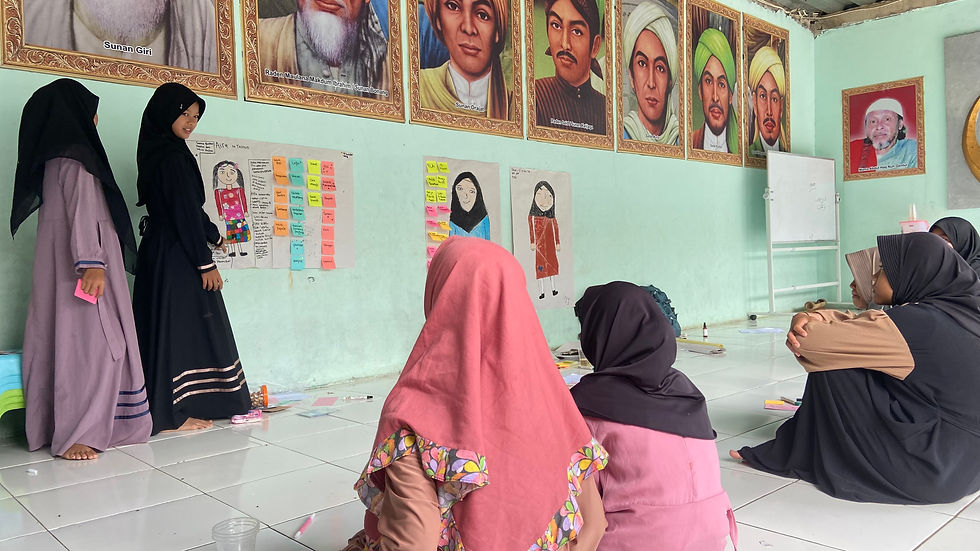
In 2024, Empatika was commissioned by JSI to assess Indonesia’s HPV vaccination program. The study focused on the perceptions and experiences of the program’s target: school-age girls. To do this, we facilitated human-centered design workshops in Bekasi and Kediri with adolescent girls and their caregivers, including in-school girls as well as those who have dropped out. These workshops explored participants’ journeys and their ideas for how the HPV vaccination could be improved. During a dissemination workshop of the study insights in Jakarta, we also invited stakeholders to brainstorm their own solutions to complement those from study participants and look for common themes and opportunities.
Some of key insights included:
Mothers are very protective of girls, although their concerns are primarily social rather than health-oriented
Participants had very little knowledge about HPV, the HPV vaccine, or cervical cancer. However, both girls and caregivers are looking to have more trusted information about these and related issues
Mothers decided if girls would be vaccinated. Fathers are consulted, but typically go along with their wives. Some moms hoped their husband would get more involved.
The lack of more advance notification contributed to many girls and caregivers feeling unprepared for vaccination.
Only a few girls mentioned being given information about what to do about side effects of if they felt sore following vaccination
While the school-based delivery model has been successful in achieving high vaccine uptake, some ambiguity related to who is ultimately responsible for certain implementation details may be affecting the quality of service delivery.
There is an opportunity to increase access by improving collaboration with local organizations, including religious institutions.
Some ideas and solutions from girls/caregivers’ and stakeholders were quite similar
Location
Bekasi, West Java; Kediri, East Java
Methods
Human-centered design
Participants
Vaccinated and unvaccinated in-school and out-of-school girls with their caregivers


